
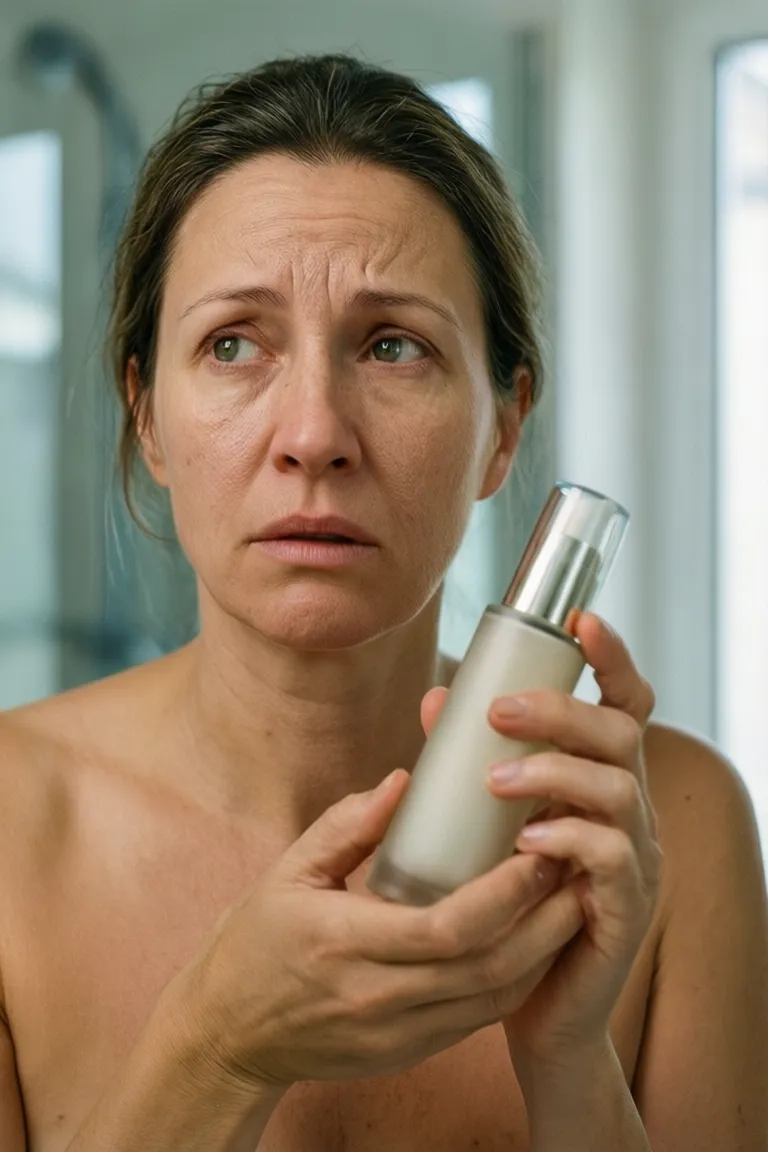
I remember the exact moment it hit me. I was standing in front of my bathroom mirror, a $150 bottle of "revolutionary" peptide serum in one hand and a $90 "luxury" night cream in the other, staring at the same dull, slightly uneven complexion I’d been trying to fix for a decade. The reflection staring back wasn’t just my 34-year-old skin; it was a monument to my own foolish hope. I had followed every rule, invested in every trending ingredient from hyaluronic acid to retinol, all packaged in chic, heavy glass bottles that made my medicine cabinet look like a high-end boutique. And for what? The persistent fine lines around my eyes still crinkled the same way, the post-inflammatory redness from old breakouts still lingered like faint ghosts, and my bank account was significantly lighter. I felt a hot wave of frustration—not just at the products, but at myself. I was the sucker who believed the marketing, who equated a higher price tag with a magic solution. I was done. But somewhere beneath that burnout was a stubborn flicker of hope, a whisper that maybe, just maybe, effective skincare didn’t have to cost a fortune. That’s when I stumbled upon Skinception, not through a glossy ad, but in a buried forum thread where someone like me was asking the real questions. I decided to try it, but with a twist: I would use it strictly within my new, pared-down, affordable routine. What happened next didn’t just change my skin; it changed my entire perspective on what it means to care for it.
My Skincare Journey: From High-End Hype to Budget Burnout
My love affair with expensive skincare started in my mid-twenties, fueled by glossy magazine ads and the intoxicating promise of transformation. I bought into the narrative that if I just invested enough—both money and faith—I could achieve perfect, ageless skin. I cycled through cult-favorite brands, each new serum or cream arriving with the thrill of potential. The ritual felt sophisticated: the weight of the packaging, the subtle, "clean" fragrances, the clinical-sounding names. But the results were always the same: a fleeting glow, maybe a bit of extra hydration, but no fundamental change. The deep-set dryness on my cheeks remained. The uneven texture on my forehead didn’t budge. I’d finish a bottle, feel a pang of guilt at the cost, and immediately research the next "holy grail," convinced this one would be different. The emotional toll was real. Each disappointment felt personal, like my skin was defective for not responding to these "miracle" workers. Financially, it was unsustainable. I’d skip dinners out or put off a new purchase to justify a skincare restock. This cycle is what I now recognize as full-blown skincare fatigue—the exhausting chase for a solution that always seems to be one more expensive product away.
The emotional and financial toll of 'miracle' products
The breaking point came during a routine online order. As I clicked "checkout" on another trio of tiny, overpriced bottles, I had a visceral reaction. I wasn't excited; I was resigned. I was paying for hope, not results. That’s when I started noticing the signs everywhere: the half-used luxury products collecting dust, the anxiety about running out, the subtle shame when friends would rave about a simple drugstore find I’d written off as "not good enough." I realized I had been conflating price with efficacy, and prestige with trust. My bathroom shelf was a museum of my own credulity. I decided to go cold turkey on high-end brands. I felt a mix of liberation and fear—what if my skin got worse? But the burnout was stronger. I switched to a basic, highly-rated drugstore cleanser, a simple moisturizer, and a reliable sunscreen, all for less than the cost of one of my previous serums. My skin didn’t revolt. It just… was. It was stable, which was something. But that old desire for improvement, for actual results, still simmered underneath the newfound budgetary peace.
Why expensive doesn't always mean effective
Here’s the hard truth I had to learn: a high price tag often pays for the experience—the scent, the packaging, the brand story—not necessarily superior active ingredients. I spent years thinking my $200 vitamin C serum was superior because it felt like silk and smelled like a citrus grove. It wasn't until I started reading ingredient lists, truly reading them, that I saw the same key components—like niacinamide, peptides, and ceramides—appearing in products at a fraction of the cost. The difference was in the vehicle, the marketing, and my own willingness to believe. I was paying for the fantasy of transformation, not the biochemistry of it. This realization was both embarrassing and freeing. It meant I wasn't broken; my strategy was.
Why I Finally Gave Skinception a Shot (and What I Paired It With)
For months, I was content with my simple, affordable routine. It was a relief not to think about skincare so much. But I missed the feeling of actively working toward better skin, not just maintaining the status quo. That’s when I found discussions about Skinception. What caught my eye wasn’t hyperbolic before-and-after photos, but conversations about its key ingredients—like Matrixyl 3000 and Argireline—which were peptides I recognized from my expensive serum days. The claims were focused: reducing the appearance of wrinkles, improving firmness. The price point was higher than my new drugstore staples, but a fraction of my old luxury splurges. The skepticism was still there, a protective shell from past letdowns. But I framed it as an experiment: Could a single, targeted product like Skinception deliver real results when the rest of my routine was built on affordable basics? My existing routine was my control group: a gentle CeraVe Hydrating Cleanser, The Ordinary’s Natural Moisturizing Factors + HA, and La Roche-Posay Anthelios SPF 50 sunscreen every single morning.
Integrating Skinception: application and usage alongside budget staples
I decided to integrate Skinception as my sole treatment step, my one "active" in an otherwise simple regimen. After cleansing at night, I’d apply a pea-sized amount of the Skinception cream to my face and neck, focusing on my forehead lines and crow's feet. I’d follow it, after letting it absorb for a minute, with my thick, dependable drugstore moisturizer to seal everything in. In the morning, it was just cleanse, moisturize, and sunscreen. This was my affordable skincare routine including Skinception. My initial expectation was cautious optimism at best. I didn’t expect a miracle. I just wanted to see if this one product, without a cadre of other expensive helpers, could move the needle. I promised myself I’d track it honestly for a full 12 weeks, noting everything. The simplicity felt radical. Instead of a 10-step ritual, I had four steps, max. This wasn't just about saving money; it was about giving my skin—and my mind—a break from the constant onslaught of new ingredients and lofty promises.
Initial expectations vs. skepticism
Let me be brutally honest: I was waiting for it to fail. A part of me wanted it to fail, to confirm my cynical belief that nothing truly worked. I thought, "If my $180 serum only did a little, how can this do more?" That's the ghost of skincare past talking—the one that ties results directly to dollars spent. But I also had a new, quieter voice saying, "What if you've been doing it wrong? What if less noise lets you hear the actual results?" I committed to the process, applying it every single night without fail, even when I was tired. I kept my other products exactly the same. No new exfoliants, no extra masks. This consistency was my new variable. I was testing not just a product, but a whole new philosophy: targeted investment within a framework of affordable care.
The Unexpected Results: What Skinception Did (and Didn't Do) for My Skin
The first two weeks were, frankly, underwhelming in terms of visual change. The texture of the cream was pleasant—rich but not greasy—and it absorbed well under my moisturizer. My skin felt comfortably hydrated overnight, but so it had with my moisturizer alone. I wasn’t discouraged; I knew skincare is a marathon. Then, around the Week 4 mark, I noticed something subtle while applying my morning sunscreen. The skin on my forehead felt smoother under my fingertips. Not dramatically tighter, but the fine lines that usually felt like tiny ridges seemed less pronounced. By Week 6, my husband, who is blissfully unaware of my skincare odysseys, asked if I’d gotten more sleep because I "looked less tired." That was the first external validation. The area around my eyes, my biggest concern, showed the most noticeable improvement. The crow's feet were still there when I smiled (as they should be—I’m human!), but their appearance at rest had softened significantly. I also found that incorporating targeted treatments can be beneficial for specific concerns, and I've explored how to reduce wrinkles naturally.
Synergistic effects: how affordable products supported Skinception's results
This is where the Skinception experience with budget skincare truly revealed itself. I believe the simplicity of my routine was its greatest strength. My affordable, fragrance-free moisturizer was the perfect partner. It provided a robust base of hydration and barrier support without any conflicting actives, allowing the peptides in Skinception to do their work without irritation or interference. My consistent use of a high-quality, affordable sunscreen every morning undoubtedly protected and preserved any progress made overnight. The results felt like a team effort, with Skinception as the star player supported by a reliable, no-fuss team. It was proof that you don't need an entire luxury lineup; you need one good player and a solid, supportive team around it. This approach to skin health is also mirrored in efforts to how to tighten loose skin on face naturally when I don’t want more procedures.
Areas where Skinception fell short of expectations
However, it’s crucial to note what it didn’t do. My post-inflammatory redness and overall skin tone brightness didn’t see a major shift. This wasn’t an all-in-one brightening or redness-correction product for me. Its magic was firmly in the realm of texture, fine lines, and a general firming effect. This honest Skinception review after years of high-end disappointment had to include that boundary. It excelled at its specific claims but didn’t solve every concern I’ve ever had. And that's okay. In fact, it was a relief. It taught me to have realistic, focused expectations for a product, instead of demanding a mythical "cure-all." My journey with Skinception and cheap alternatives showed me that different concerns often require different, targeted solutions, and that's a more sustainable approach than seeking one unicorn product. For those specifically looking into firming benefits, my experience with firming serums for women over 40 might offer further insights.
Scientific Evidence
My Honest Take: Is Skinception Worth It When You're on a Budget?
This is the million-dollar question, or in this case, the question for those of us watching our dollars. After my 12-week experiment, my answer is a qualified yes—but with crucial context. Is Skinception worth it for budget-conscious users? It is if you are looking for a targeted treatment for aging signs like wrinkles and loss of firmness, and you are willing to make it the single splurge in an otherwise cost-effective routine. The value proposition became clear when I did a mental Skinception vs expensive serums review. I had used a $180 peptide serum that gave me similar, albeit slightly less noticeable, results. Skinception, at a lower price point, delivered more visible improvement for me. The key differentiator was the environment I used it in. Previously, I was layering multiple expensive actives, potentially overwhelming my skin and muddying the results. This time, Skinception had the stage to itself, supported by humble, effective basics.
Value proposition: where Skinception excels for budget-conscious users
For someone on a budget, its worth hinges on strategy. You cannot pair it with a dozen other expensive products and expect to save money. Its value shines when it’s your one dedicated treatment. If your primary concerns are severe acne, major hyperpigmentation, or intense redness, your budget might be better spent elsewhere first. But if fine lines, creeping dryness, and loss of elasticity are your key battles, and you’ve built a stable, affordable foundation of cleanser, moisturizer, and SPF, then adding Skinception can be a powerful and financially sensible upgrade. It taught me that strategic investment beats blanket spending every time.
To help visualize the different paths you can take, here’s a breakdown of approaches based on my experience and observations:
| Skincare Approach | Best For | Realistic Timeline for Visible Change | Key Consideration |
|---|---|---|---|
| Budget Basics Only (Cleanser, Moisturizer, SPF) | Starting fresh, sensitive skin, or maintaining healthy skin | 2-4 weeks for hydration/calm | Excellent foundation, but may not address specific aging concerns |
| Budget Basics + One Targeted Treatment (e.g., Skinception) | Budget-conscious users with focused concerns like fine lines | 6-8 weeks for targeted results | Requires patience and consistency; maximizes value of the single investment |
| Multiple High-End Actives & Treatments | Those with unlimited budget seeking multi-correction | Varies; risk of irritation can delay results | High cost, potential for ingredient overload, difficult to pinpoint what works |
| Professional-Grade Prescription Routines | Severe acne, pronounced hyperpigmentation, deep wrinkles | As directed by a dermatologist | Requires medical guidance; can be effective but often comes with side effects and significant cost |
My journey landed me firmly in the second row. It was the sweet spot between efficacy and economics, and it’s the approach I wish I’d found years ago.
Beyond the Hype: My New Approach to Skincare That Actually Works
This entire journey has led me to a completely new skincare philosophy, one rooted in efficacy and intelligence over prestige and price. I no longer believe in "miracle in a jar," but I do believe in "results through smart formulation and consistency." My approach now is surgical: identify the primary concern, research the most effective ingredient categories for it, and find the best-reviewed product in that category that fits a sensible budget. Everything else in my routine is about support and protection—gentle cleansing, barrier-repair moisturizing, and relentless sun protection. These pillars are non-negotiable and are easily achieved with fantastic, affordable products. The science behind effective skincare ingredients is constantly evolving, and understanding these advancements can be key to achieving desired results, as highlighted in studies on Hybrid Cosmeceutical Innovations for Aging Skin: Bridging Functional Skincare and Therapeutic Benefits through Multifunctional Formulations.
Principles of effective, affordable skincare
I look for key ingredients, not key brands. Niacinamide, ceramides, and glycerin are heroes that don’t require a luxury markup. I’ve learned to trust my skin’s feedback over a marketing slogan. This journey with Skinception and cheap alternatives was my ultimate lesson. It proved that you don’t need an arsenal of expensive products to see real change. You need one or two well-chosen actives, a solid supporting cast of affordable staples, and the patience to let them work. The greatest change wasn’t just in my skin’s texture; it was in my mindset. I’ve moved from a place of anxious consumption to one of confident curation. My skincare routine is now a source of self-care, not financial stress, and that, perhaps, is the most transformative result of all.
Building a sustainable skincare routine without breaking the bank
Sustainability isn't just about the environment; it's about your wallet and your mental energy. My routine now takes five minutes, twice a day. I don't have a drawer full of half-used products guilting me. I have a cleanser, a treatment, a moisturizer, and a sunscreen. That's it. When I see a new "must-have" serum, I ask myself: "What concern does this address that my current routine doesn't? Is this ingredient proven, or is it just hype?" Most of the time, I walk away. That freedom—the freedom to ignore the noise—is priceless. It’s the ultimate form of authority through vulnerability. I had to admit I was wrong, that I’d been misled, to finally find what was right.
The Real Cost of Skincare: Time, Money, and Peace of Mind
If you'd asked me a year ago what good skincare cost, I'd have quoted a dollar amount. Now, I'd describe it in three currencies: time, money, and peace of mind. The expensive routine cost me a fortune, consumed my mental space with research and worry, and gave me zero peace—only the anxiety of the next purchase. My current routine, this Skinception review for women over 30 on a budget in action, costs a fraction of the money. It takes minimal time. And it gives me immense peace. I'm not chasing; I'm maintaining and gently improving. I've broken the cycle of hope and disappointment. I finally understand that the goal isn't perfection—it's health, consistency, and feeling good in the skin I'm in, without a side order of financial regret.
Frequently Asked Questions
Q: How long did it take for you to see real results with Skinception? A: I noticed the first subtle changes in skin texture around the 4-week mark. The more noticeable softening of fine lines, especially around my eyes, became apparent to me around Week 6-8. For a comprehensive assessment, I’d recommend committing to a full 12-week trial, as collagen support and skin renewal are gradual processes. Don't be discouraged if you don't see anything dramatic in the first month; skincare is a long game.
Q: Can I use Skinception if I have sensitive skin? A: In my experience, yes, but caution is key. The formula I used was fragrance-free and paired beautifully with my gentle, affordable routine. However, I always recommend patch testing any new product behind your ear or on your jawline for a few nights before applying it to your entire face. Starting with application every other night can also help your skin adjust. Listen to your skin—if you experience stinging or redness, scale back.
Q: Do I need to use other expensive products with Skinception for it to work? A: Absolutely not. In fact, my Skinception review from someone who used affordable products is built on the opposite premise. I saw my best results when I used it as my sole treatment product alongside a basic, drugstore cleanser, moisturizer, and sunscreen. Overloading your skin with multiple actives can be counterproductive, irritating, and expensive. Let it be the star of a simple show.
Q: What’s the biggest mistake people make when adding a product like this? A: Impatience and inconsistency. Skincare is a long-term commitment. Applying it sporadically or giving up after two weeks won’t yield results. The other critical mistake is not using sunscreen daily. Any progress made in repairing and renewing skin at night can be undone by UV damage during the day. Sunscreen is non-negotiable, especially when using any treatment product.
Q: If I’m on a very tight budget, should I prioritize Skinception or a good sunscreen? A: Sunscreen, 100%, no question. Sun protection is the single most effective anti-aging and skin-health product in existence. A good, affordable SPF is the foundation of everything. Once that is firmly and consistently in your routine, then you can consider saving for or adding a treatment product like Skinception if your budget allows and you have specific concerns it addresses.
Q: Who would benefit the most from trying Skinception? A: I believe it’s ideal for someone like my former self: in their 30s or 40s, experiencing early signs of aging like fine lines and loss of firmness, who is frustrated with the cost and complexity of high-end skincare but still wants a targeted, effective treatment. It’s perfect for someone willing to build a simple, supportive routine around it and has the patience to let it work.
📌 Love this guide? Save it on Pinterest!
Pin Skinception Review 2026: Affordable Skincare That Actually Works! to your board so you can come back to it later.

